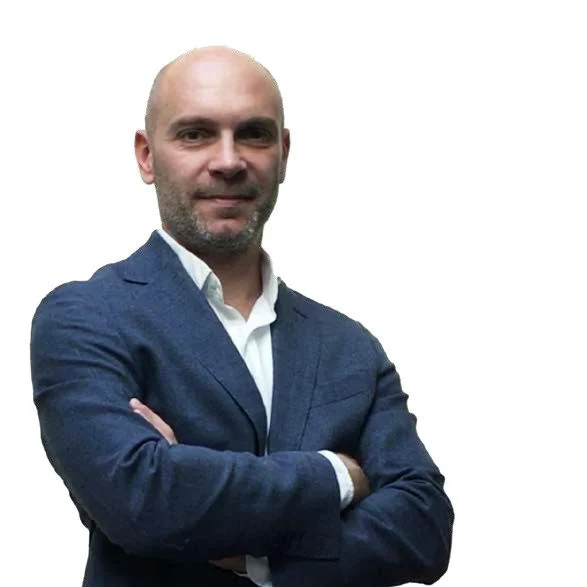
The transmission of traditional know-how represents the very essence of theUnion compagnonnique. Today we highlight an exceptional project that perfectly embodies this mission: The medieval building of Guyenne. At his head, a man with an unusual career, Valéry Ossent, engineer BTP converted by passion to ancestral construction techniques.
« I always wanted to go back to the Southwest », tells us this native Landais who, after working in the road works in France and Africa, chose to settle in Bordeaux in 2010. However, it was only in 2017 that his true vocation was revealed: the restoration of heritage.
This conversion led to training in stone cutting, convinced that « To work in this branch, we needed people from the serrail. ». An approach that perfectly illustrates the companion approach to learning through practice. « For me, things are clear, you have to practice while learning », he says.
From this passion was born in August 2018, The Association of the Medieval Building of Guyenne, an ambitious project aimed at building a Romanesque chapel according to the techniques and tools of the Middle Ages. About fifteen people – architects, historians, artists, stone tailors, glassmakers, painters – participated in the genesis of this extraordinary adventure.
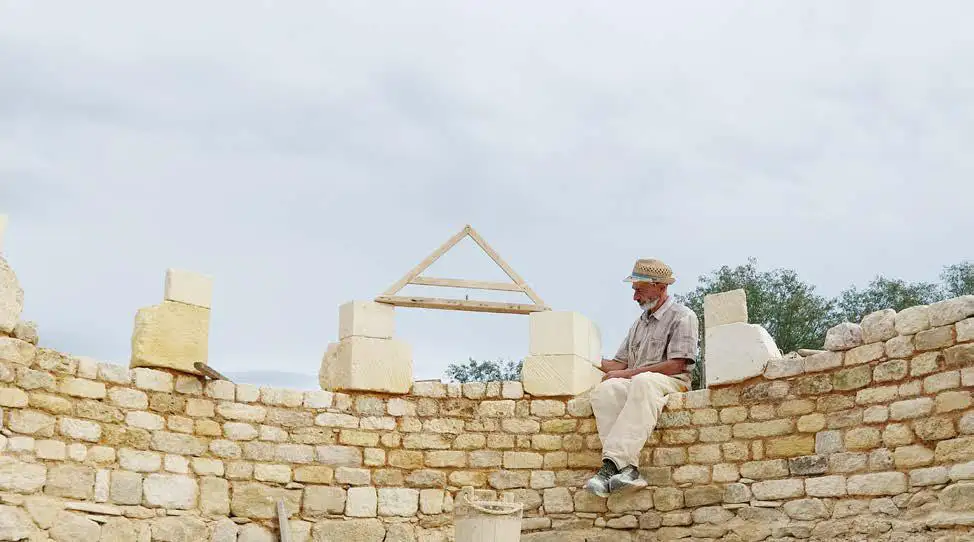
How a historic site becomes a living transmission laboratory
Five years of administrative action were required before the first shovel in the summer of 2023. A delay that reflects the scale and complexity of the project, but never began to determine its initiators.
Today, the project is led by Frédéric Thibault, Compagnon stone tailor, who guarantees historical coherence. He supervises a team composed mainly of people in training, thus embodying the social dimension of the project. Indeed, beyond the building itself, Guyenne's medieval construction site has set itself the task of training new talents in occupations that struggle to recruit.
« We find that our trades lack professionals », explains Valéry Ossent. « That is why we have introduced a baccalaureate of jobs to train them internally for two years in our jobs. » An approach that echoes the fundamental mission of theUnion compagnonnique : transfer know-how and prepare succession.
Readers of our journal Le Compagnonnage are well aware of the importance of these initiatives which combine the preservation of traditional techniques and the training of the artisans of tomorrow.
Why the diversity of trades is the strength of this unique project
Guyenne's medieval construction site is not limited to stone. It brings together a constellation of art professions that interact in an organization reminiscent of that of the Danish shipyards: stone carving, masonry, carpentry, covering with plant materials, blacksmithing, basketry...
This diversity echoes the very spirit of the Companion, where each discipline enriches others in a collective approach of excellence. Moreover, although Valéry Ossent is not himself a Companion, he deeply shares our values. « I discover the values of the Companionage and I confess that if I could have known them younger, I would have taken this path », he entrusts us.
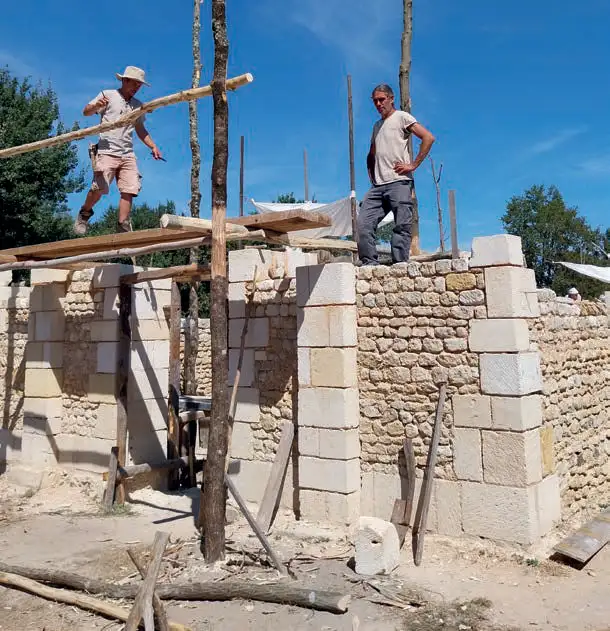
His message to the Companions is warm and direct: « Come and see us! The site is a passageway for the Companions. You learn a lot when you travel. » An invitation that resonates particularly with our Tour de France tradition and our conviction that learning feeds on diverse exchanges and experiences.
What technical difficulties does this extraordinary project have to overcome on a daily basis? How do medieval techniques adapt to contemporary constraints?
Our latest issue of Le Compagnonage reveals the fascinating behind the scenes of this adventure through an exclusive interview with Valéry Ossent.
https://www.thecompanying.com/magazines
For more information visit the site : www.guyenne-medieval.com


